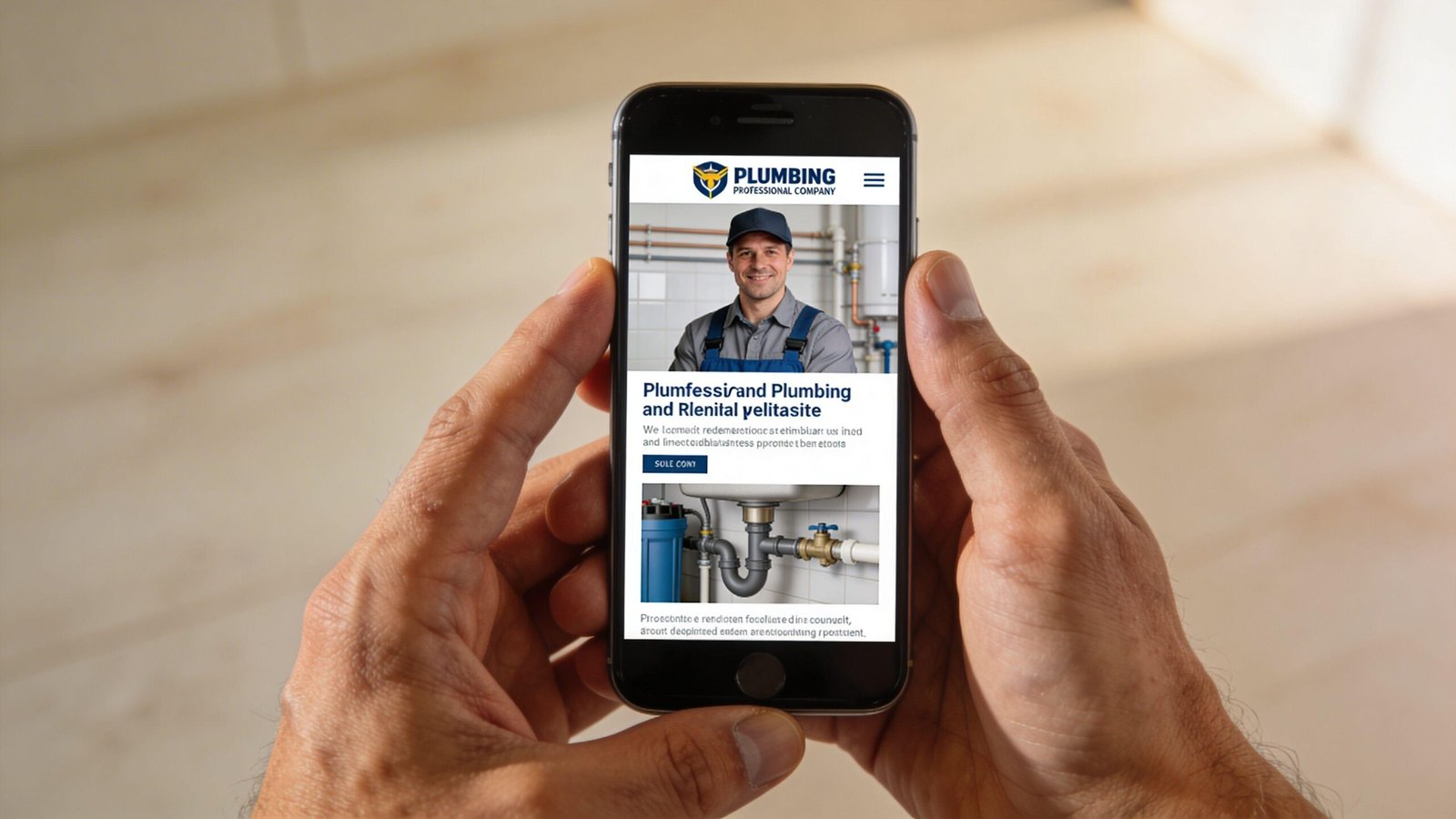
Most people don’t browse a plumber’s website for fun. They land on it with water on the floor, a hot shower that has gone cold, or a drain that won’t clear. Within seconds they decide whether to call you or go back to Google and try the next result.
That’s why a website redesign for plumbers isn’t about a fresher colour palette. It’s about removing everything that stands between a worried customer and your phone number. This guide covers what to fix, what to keep, and how to redesign your site without losing the Google rankings you’ve already earned.
The short answer: A plumbing website turns visitors into jobs when it loads fast on mobile, shows a tap-to-call button on every screen, gives each service and service area its own useful page, proves you’re trustworthy with real reviews and credentials, and makes quoting or booking take under a minute.
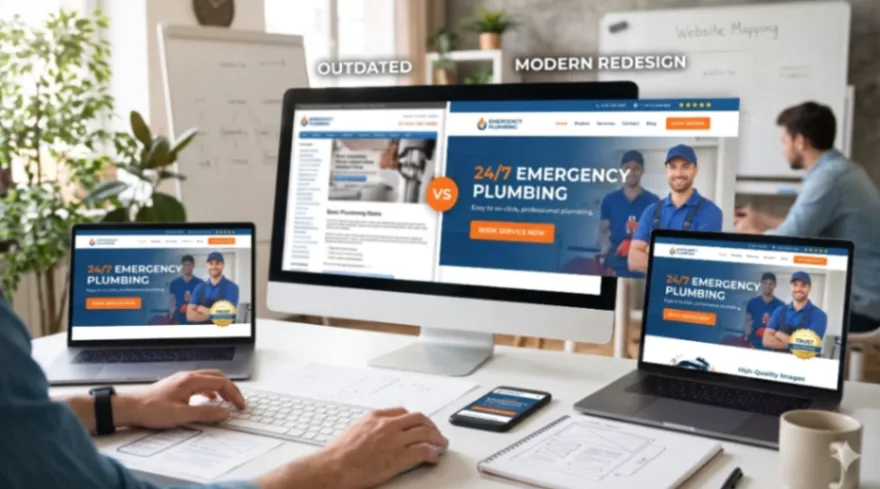
Why Many Plumbing Websites Lose Jobs Before the Phone Rings
Plumbing customers fall into two groups. Some are in an emergency and want help now. Others are planning a bathroom upgrade or hot water replacement and are comparing options. Your website has to serve both, and most don’t.
Common reasons visitors leave without calling:
- The phone number is hidden in a menu or only appears at the bottom of the page
- The site is slow or awkward to use on a phone
- The homepage says “quality service you can trust” but never says what you do or where
- Every service is squeezed onto one page, so Google and customers can’t tell what you specialise in
- There’s no proof: no reviews, no licence details, no photos of real jobs
- The enquiry form asks for too much
None of these are design flaws in the artistic sense. They’re conversion problems, and a good redesign fixes them.
Signs It’s Time for a Plumbing Website Redesign
You likely need more than a few tweaks if:
- Your site is hard to use with one thumb on a phone
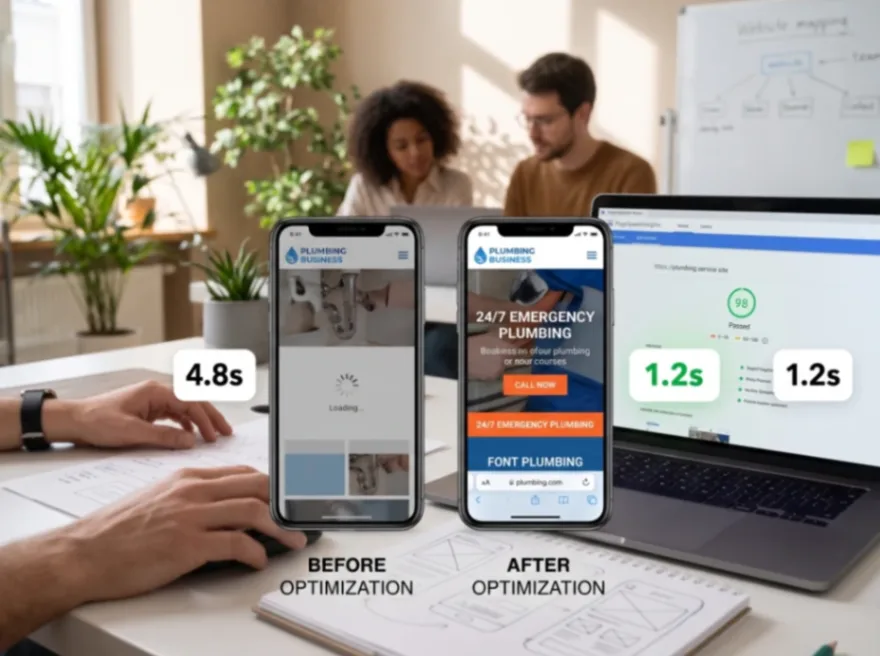
- Pages take several seconds to load (test yours with Google PageSpeed Insights)
- You get traffic but few calls or form enquiries
- Your site only ranks for your business name, not for services like “blocked drains” or “emergency plumber”
- Your branding, service list or team photos are years out of date
- You can’t edit the site without calling a developer
- You have no idea how many calls or enquiries the website actually produces
If two or three of these sound familiar, a redesign is probably a better investment than patching the existing site.
What a High-Converting Plumbing Website Includes
1. A first screen that answers three questions
Within a few seconds, a visitor should know what you do, where you do it, and how to reach you. A clear headline, your service area, your phone number and one main button are usually enough. Only promise 24/7 service if you genuinely offer it.
2. Click-to-call everywhere, plus a sticky mobile bar
Make your number a tap-to-call link in the header, on every service page and in the footer. On mobile, a sticky call button keeps the next step one tap away. If you use call tracking, keep your main number consistent with your Google Business Profile.
3. One page per core service
Create a dedicated page for each major service, such as blocked drains, hot water systems (or water heaters), leak detection, bathroom plumbing and gas fitting where you’re licensed. Each page should explain what’s included, how the job works, common situations, a few FAQs and a clear call to action. Dedicated pages also give you more chances to appear for specific searches.
4. Genuine service area pages
If you serve several suburbs or towns, local pages can help. But only create them for areas you actually cover, and give each one real local detail. Copying one page and swapping the place name adds little value and can look spammy.
5. Trust signals next to the buttons
People hesitate before letting a stranger into their home. Put proof where decisions happen:
- Recent Google reviews
- Licence or registration details where applicable
- Insurance and guarantee information
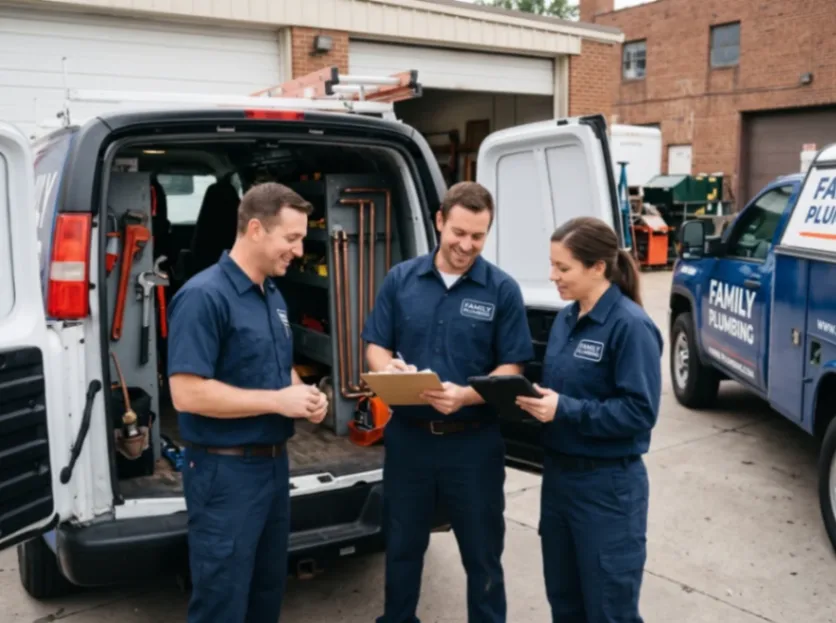
- Photos of your actual team, vans and completed jobs
- Memberships or accreditations
6. Short quote and booking forms
Ask for the essentials: name, phone number, suburb or postcode and a short description of the problem. An optional photo upload helps you quote faster. Add a clear confirmation message that tells people when to expect a reply.
7. Speed and mobile-first design
Compress images, avoid heavy sliders and pop-ups, and use reliable hosting and caching. Check your Core Web Vitals in Google Search Console, and test the site on a real phone, not just a desktop browser.
8. Technical SEO foundations
Each page needs a unique title tag and meta description, a logical heading structure, clean URLs and an XML sitemap. Adding LocalBusiness or Plumber schema markup helps search engines understand your business, and consistent name, address and phone details across your site and Google Business Profile support local visibility.
Not sure where your current site is losing calls? Our website design and development services team builds fast, mobile-first websites for service businesses. Book a free consultation and we’ll talk through your current site, where visitors are likely dropping off, and whether a full redesign or targeted fixes makes more sense.
SEO for Plumbing Companies: How to Redesign Without Losing Rankings
This is where many redesigns go wrong. A beautiful new site that drops your old URLs or deletes pages that bring in calls can wipe out years of search visibility. Protect what you have with this process:
- List every current URL. Crawl your site and note which pages bring traffic, calls or enquiries (Google Search Console and analytics will show you).
- Keep URLs where you can. If a page that ranks well doesn’t need a new address, leave it alone.
- Redirect what changes. Use 301 redirects from each old URL to the closest equivalent new page, not blanket redirects to the homepage.
- Improve content instead of deleting it. Pages that already rank should be strengthened, not removed.
- Keep what works in titles, headings and internal links unless you’re improving them deliberately.
- Build on a staging site, then launch carefully. Block search engines from the staging copy, and make sure that block is removed when the new site goes live. Leaving a “noindex” setting on is a surprisingly common launch mistake.
- Monitor after launch. Submit your new sitemap, check Search Console for errors, and watch rankings and calls closely for the first few weeks. Small fluctuations are normal.
If this feels technical, that’s because it is. Combining technical SEO and on-page SEO with the redesign is the safest way to launch a site that looks better and still gets found.
How to Tell Whether the Redesign Is Working
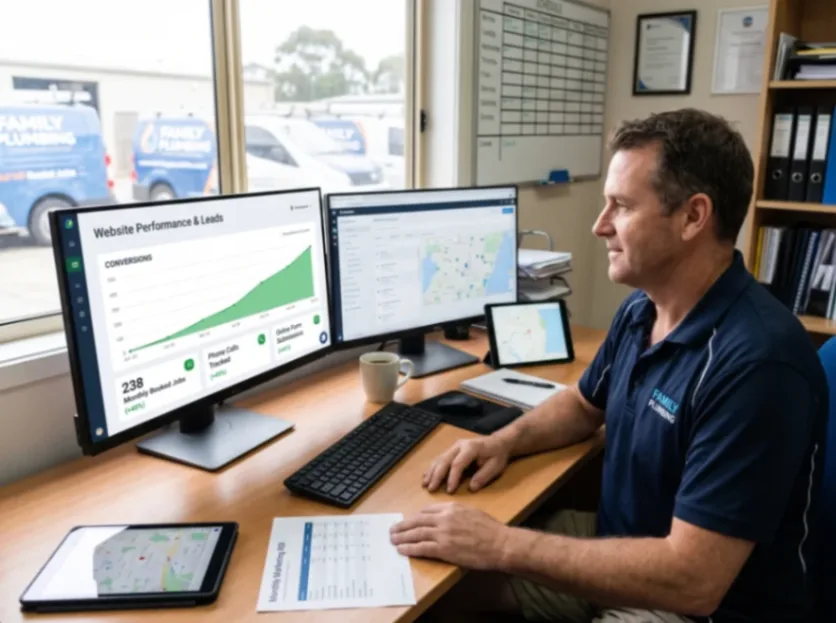
Traffic alone doesn’t pay your wages. Before launch, record a baseline: monthly calls, form submissions, Google Business Profile calls and direction requests, and conversion rates on mobile and desktop. Then track the same numbers after launch.
Set up tracking for:
- Taps on your phone number
- Quote and booking form submissions
- Tracked phone calls, if you use call tracking
- Booked jobs, by asking every new customer how they found you
The goal is more jobs from the same visitors, not just more visitors.
A Practical Redesign Roadmap
- Audit your current site: speed, mobile usability, rankings, content and conversion tracking
- Define your priority services and service areas
- Plan the site structure and the content for each page
- Design mobile-first, then scale up to desktop
- Build and test on staging, including forms, call buttons and redirects
- Launch with redirects, sitemap and tracking in place
- Review and improve based on real call and enquiry data
What Affects the Cost of a Plumbing Website Redesign
There’s no single price, because projects differ. The main factors are:
- The number of pages and services
- Custom design versus a template-based build
- Content writing and professional photography
- Integrations such as online booking, payments or job management software
- SEO migration work, including redirects
- Ongoing hosting, security and maintenance
Ask for a quote based on a clear scope, and be cautious of very cheap template sites with no SEO or tracking included.
Common Redesign Mistakes to Avoid
- Focusing on looks and ignoring calls and enquiries
- Using only stock photos and no real jobs or team members
- Burying the phone number in a menu
- Deleting old pages without redirects
- Publishing thin, near-identical suburb pages
- Launching without any conversion tracking
Frequently Asked Questions
How long does a plumbing website redesign take?
It depends on the size of the site, how quickly content and approvals come through, and any integrations. A typical small-business site often takes several weeks, and larger or more complex projects can take longer.
Will a website redesign hurt my SEO?
It can if it’s done carelessly, especially if URLs change without redirects or ranking content is removed. With proper planning, redirects and post-launch monitoring, you can protect your rankings and often improve them.
How can I get more plumbing leads online?
Start with a fast, mobile-friendly website with clear service pages and click-to-call buttons. Then support it with a well-maintained Google Business Profile, a steady flow of genuine reviews, and local SEO. Paid ads can add to this, but they work best when the website already converts well.
What pages does a plumber’s website need?
At minimum: a homepage, individual service pages, service area pages (where relevant), an about or team page, reviews, a contact or quote page and an FAQ section.
Should I redesign my plumbing website or just fix it?
If the problems are mainly content, tracking or small speed issues, targeted fixes may be enough. If the structure, mobile experience or platform is the problem, a redesign usually gives better results. An audit will tell you which.
Do plumbers need a blog?
It helps, but it isn’t the first priority. Strong service and location pages usually matter more. A blog is useful for answering common customer questions once the core pages are solid.
Ready to Turn More Visitors Into Jobs?
A good plumbing website works like a reliable receptionist: it’s available around the clock, answers the right questions and makes the next step obvious. If your current site isn’t doing that, a well-planned redesign can fix it without risking the rankings you’ve built.
Rajhans Digital designs and builds websites for service businesses with conversions and search visibility in mind. You can browse our portfolio to see our work, or book a free consultation to talk through your site and your goals.